

How to Check If Your Shilajit Is Fake
Put the spoon and lighter away. These five checks tell you more about the jar than any viral home test.
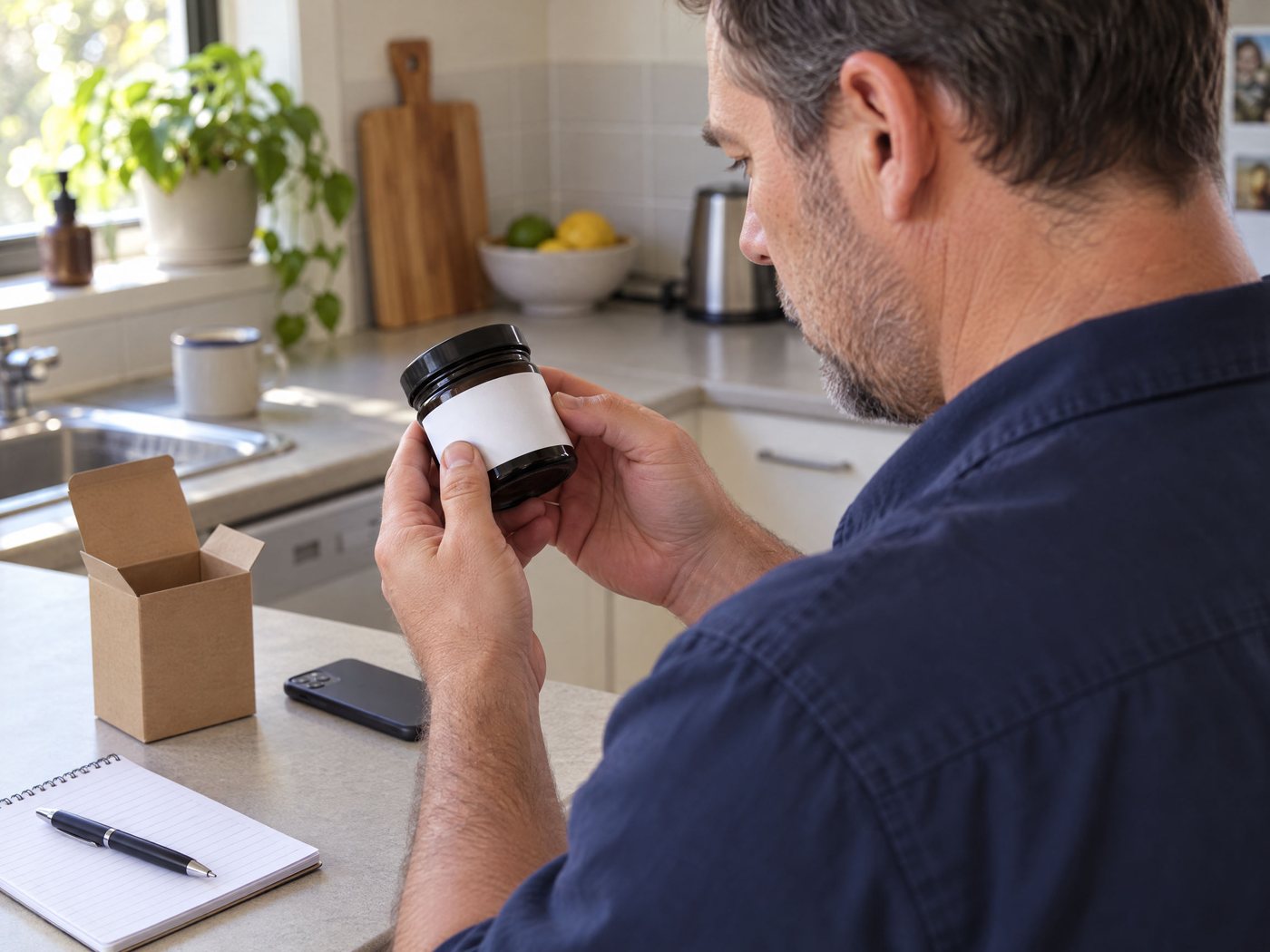
The jar is already on your bench. It is dark, sticky and bitter. The seller called it Himalayan. So is it real?
Those details can feel convincing, but none gives a final answer. Colour varies. Texture changes with temperature. Plenty of authentic ingredients taste unpleasant, and an imitation can be made to look convincing.
The honest question is not, “Did it pass a trick I saw online?” It is, “Can I connect this exact product to specific, current and readable evidence?”
Use these five checks before deciding what the jar has earned.
Match the Jar to Its Own Label
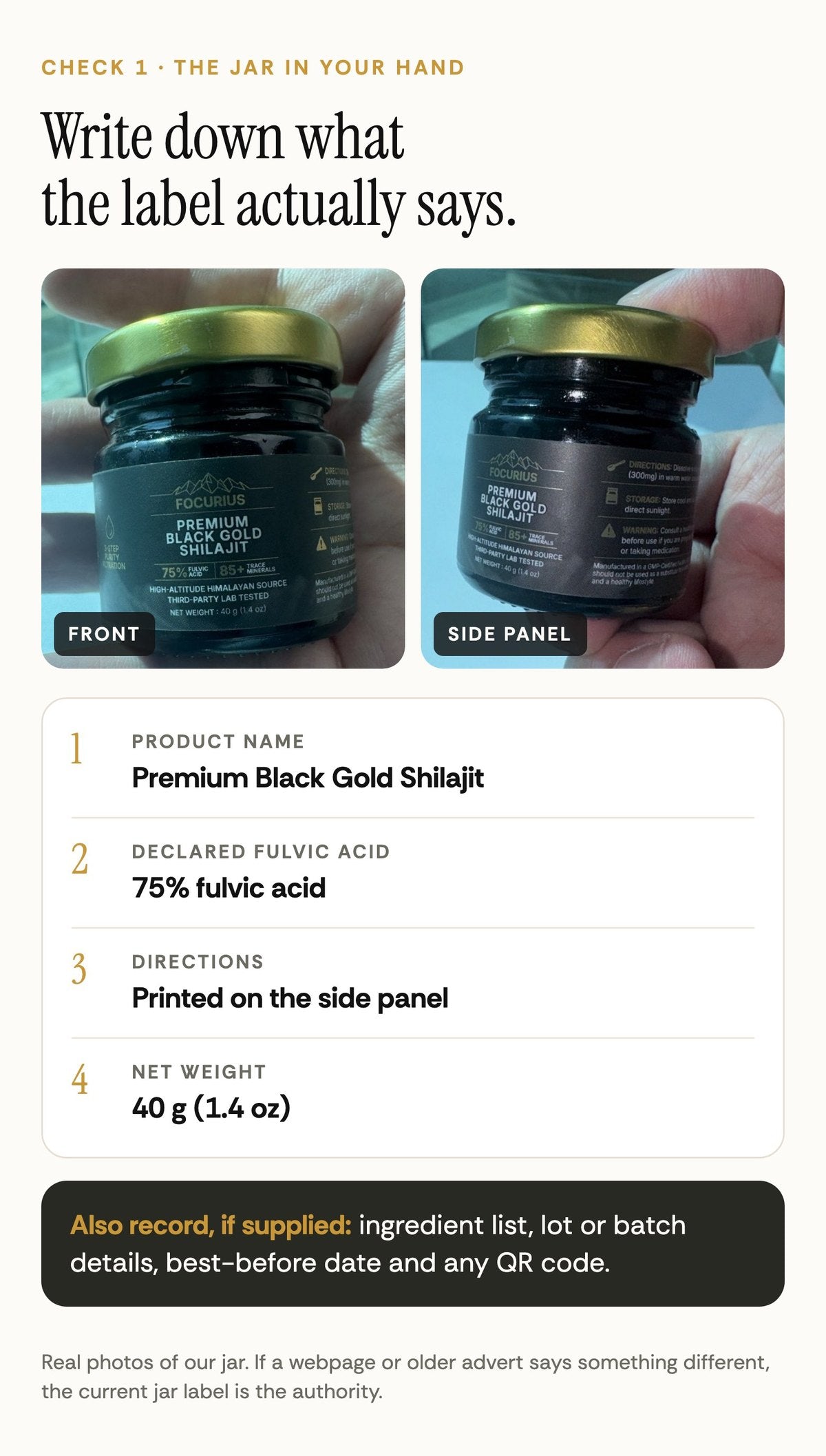
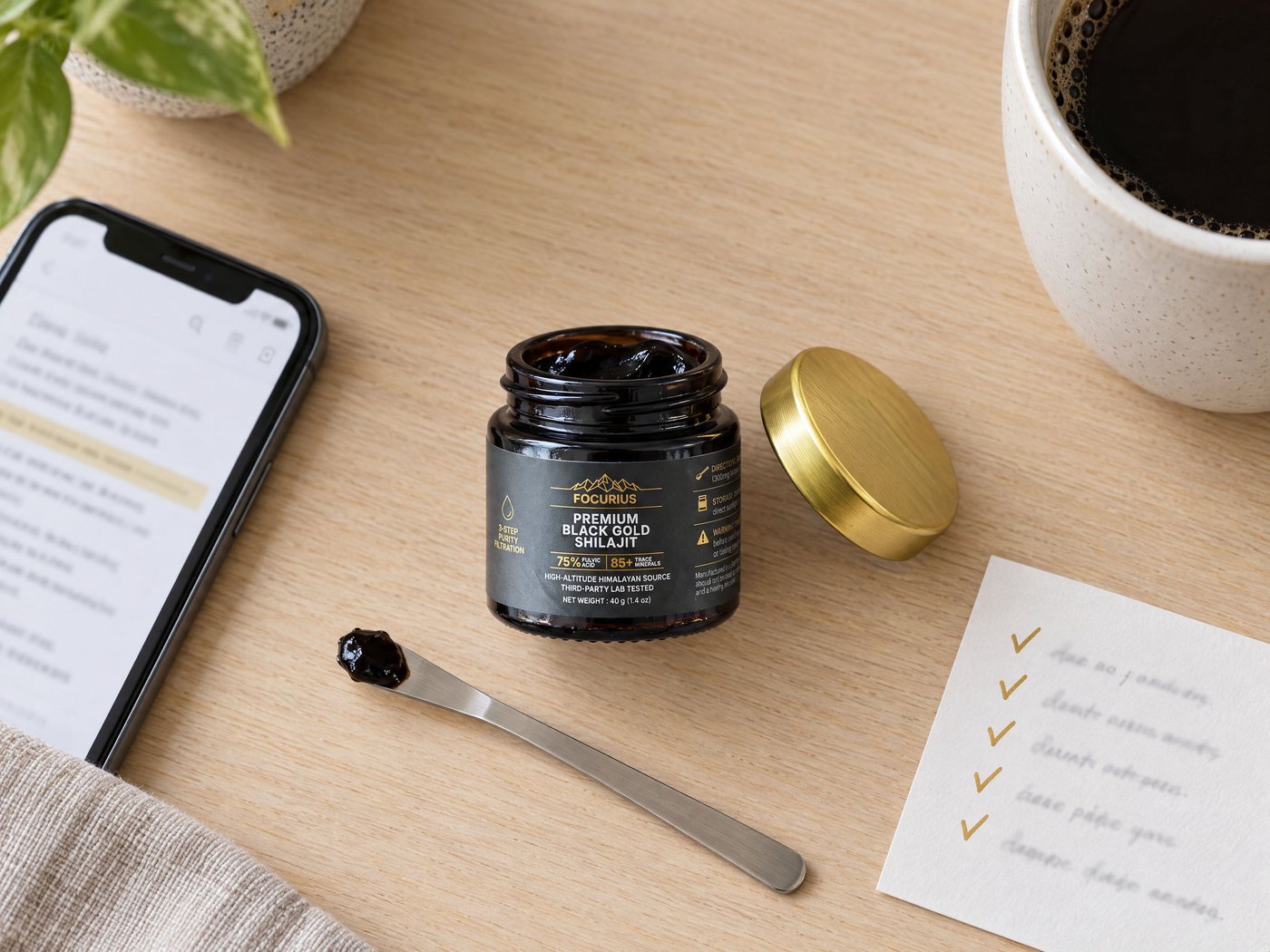
Start with what is physically in your hand. Record the product name, ingredient list, serving directions, declared fulvic acid percentage, lot or batch details, best-before date and any QR code.
Missing information does not prove a counterfeit. It does make the next step harder. A seller should not expect one generic certificate to cover every dark product in its range.
Our Black Gold label states pure shilajit resin, a 75% fulvic acid claim and directions for a 300 to 500 mg serve in a warm drink. Use the current jar label as the authority if any webpage or older advert says something different.
Follow the QR Code Past the “Lab Tested” Badge
A badge is marketing. A report is a document you can inspect.
Open the link and look for the laboratory name, report number, issue date, sample description, test method and results. Then ask the question most pages skip: how does this report relate to the jar in your hand?
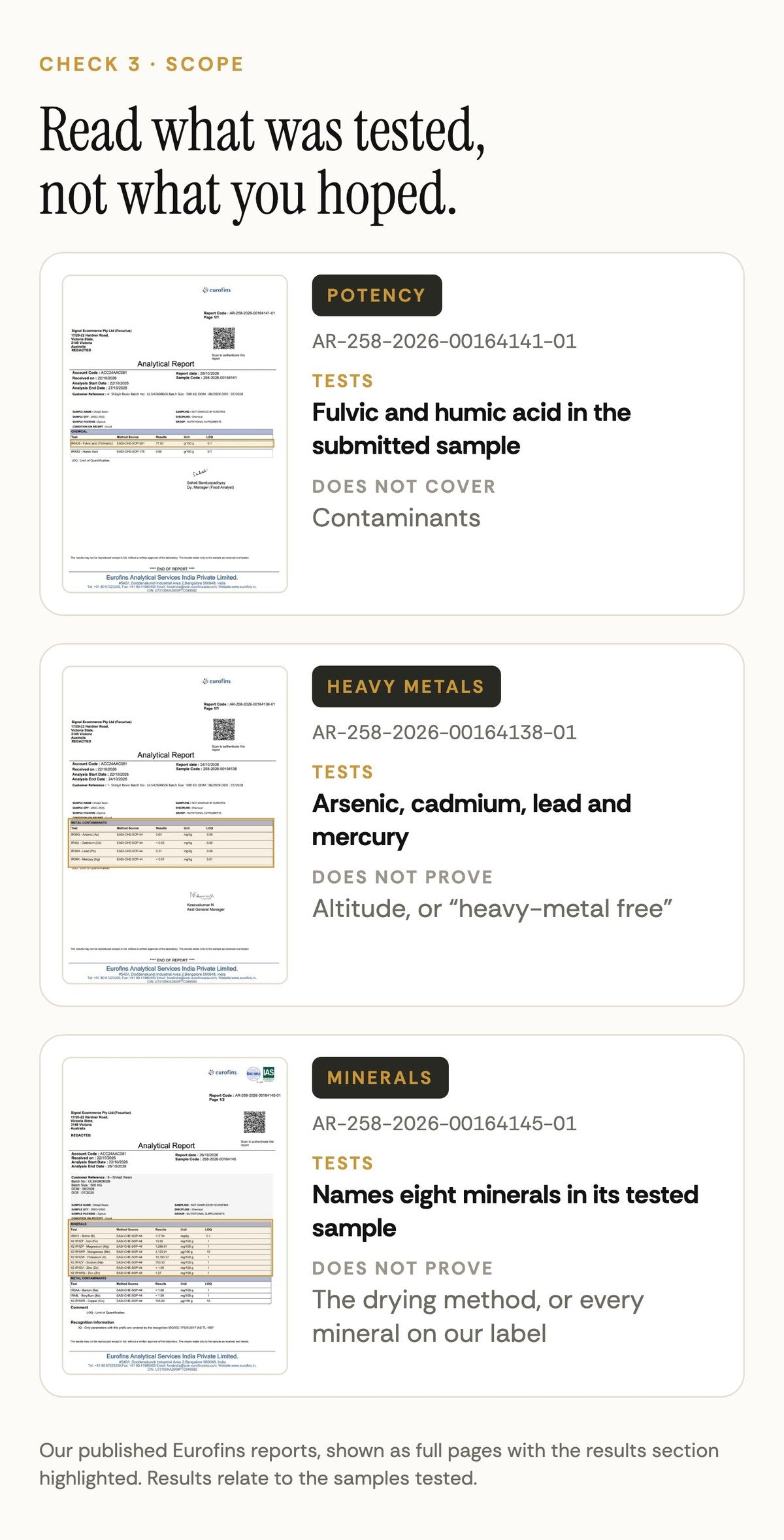
We publish eight reports through our public report index. Our Eurofins fulvic and humic acid report is AR-258-2026-00164141-01, issued 28 October 2026. It measured 77.83 g/100 g fulvic acid in the submitted sample. That supports what was measured in that sample. It does not verify every jar we will ever sell.

Read What Was Tested, Not What You Hoped Was Tested
One certificate rarely answers every question.
A potency report does not automatically cover contaminants. A heavy-metals report does not prove altitude. A mineral panel does not prove the drying method. Read the scope and result of each document instead of treating “passed” as a universal verdict.
Our current heavy-metals report tests the submitted sample for arsenic, cadmium, lead and mercury. We say tested for heavy metals, not “heavy-metal free”. Our public mineral panel names eight minerals in its tested sample, so we do not use that report as proof that it independently counted every mineral mentioned on our label.
Treat Taste, Texture and Home Tests as Clues
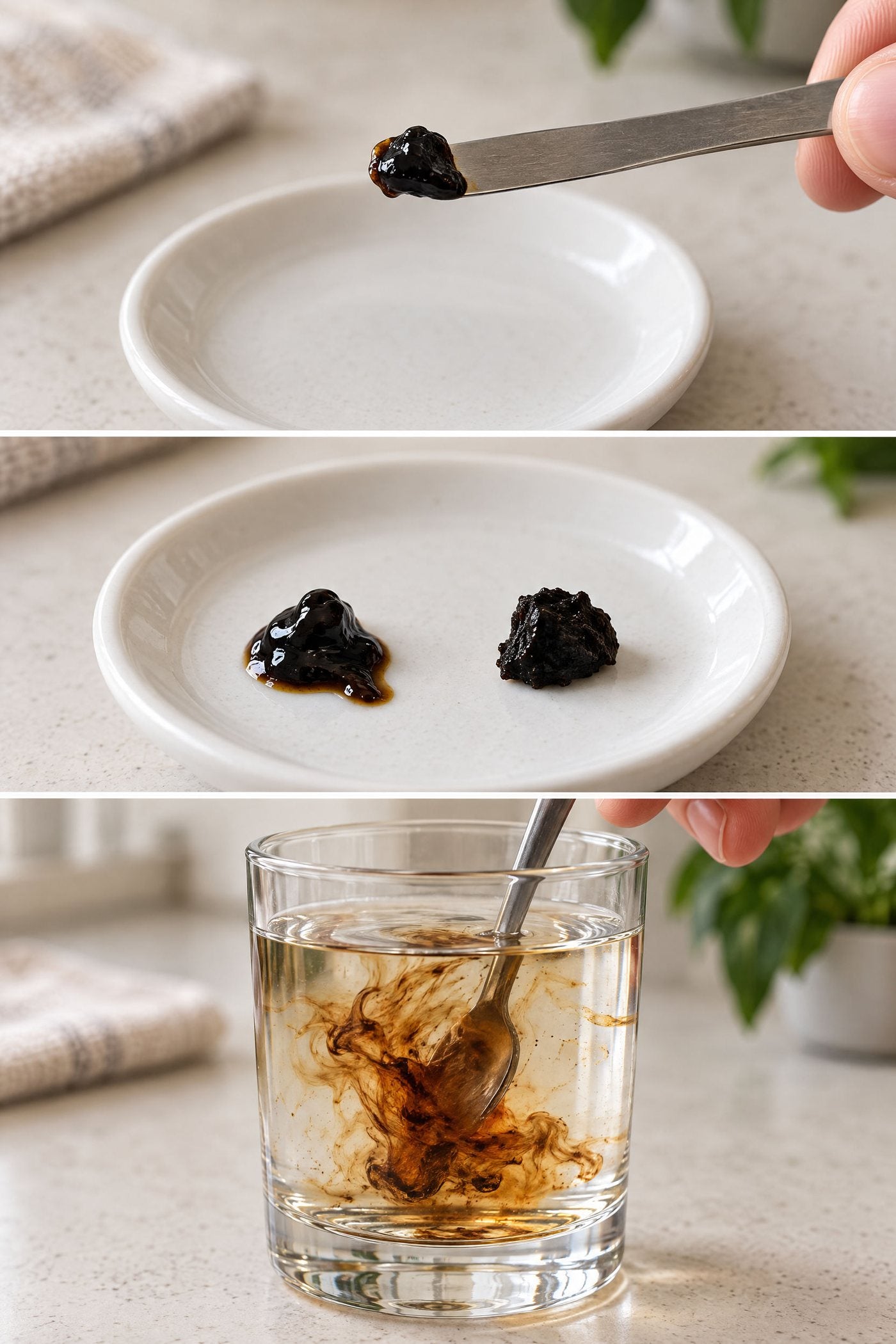
Real resin is commonly dark, earthy, mineral and slightly bitter. It may soften when warm and become firmer when cool. A small serve should disperse into a warm drink with stirring.
Those are useful expectations, not an authenticity verdict. Burning, freezing, stretching, tasting or dissolving a sample cannot measure fulvic acid, identify contaminants or establish where it came from. A suspicious smell, unexpected ingredient or radically different texture is a reason to pause and ask questions. It is not a home laboratory result.
Our resin is meant to be used, not put through internet theatre: measure 300 to 500 mg, add it to warm water, tea or coffee and follow the current directions.
Ask the Seller to Trace the Story Backwards
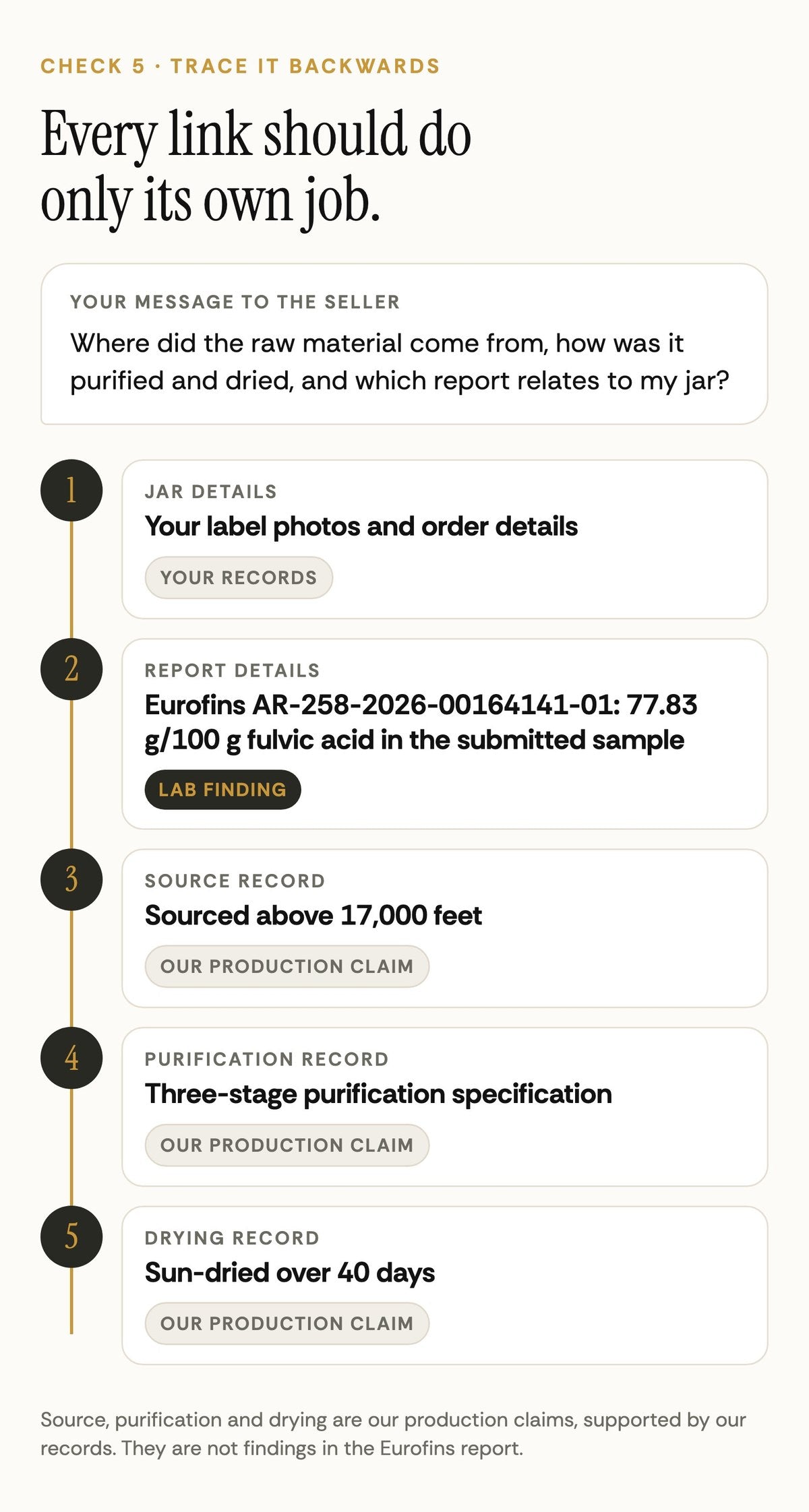
Now contact the seller. Ask where the raw material came from, how it was purified and dried, which report relates to your product, and what they will do if the details do not line up.

A slow reply is not proof of fraud. A clear answer gives you something specific to assess. Save the response with photos of your label and order details.
We state that our raw shilajit is sourced from above 17,000 feet, follows our three-stage purification specification and is sun-dried over 40 days. Those are our production claims, supported by our records. They are not findings in the Eurofins report. We keep the distinction visible because traceability is stronger when every piece of evidence does only the job it can actually do.
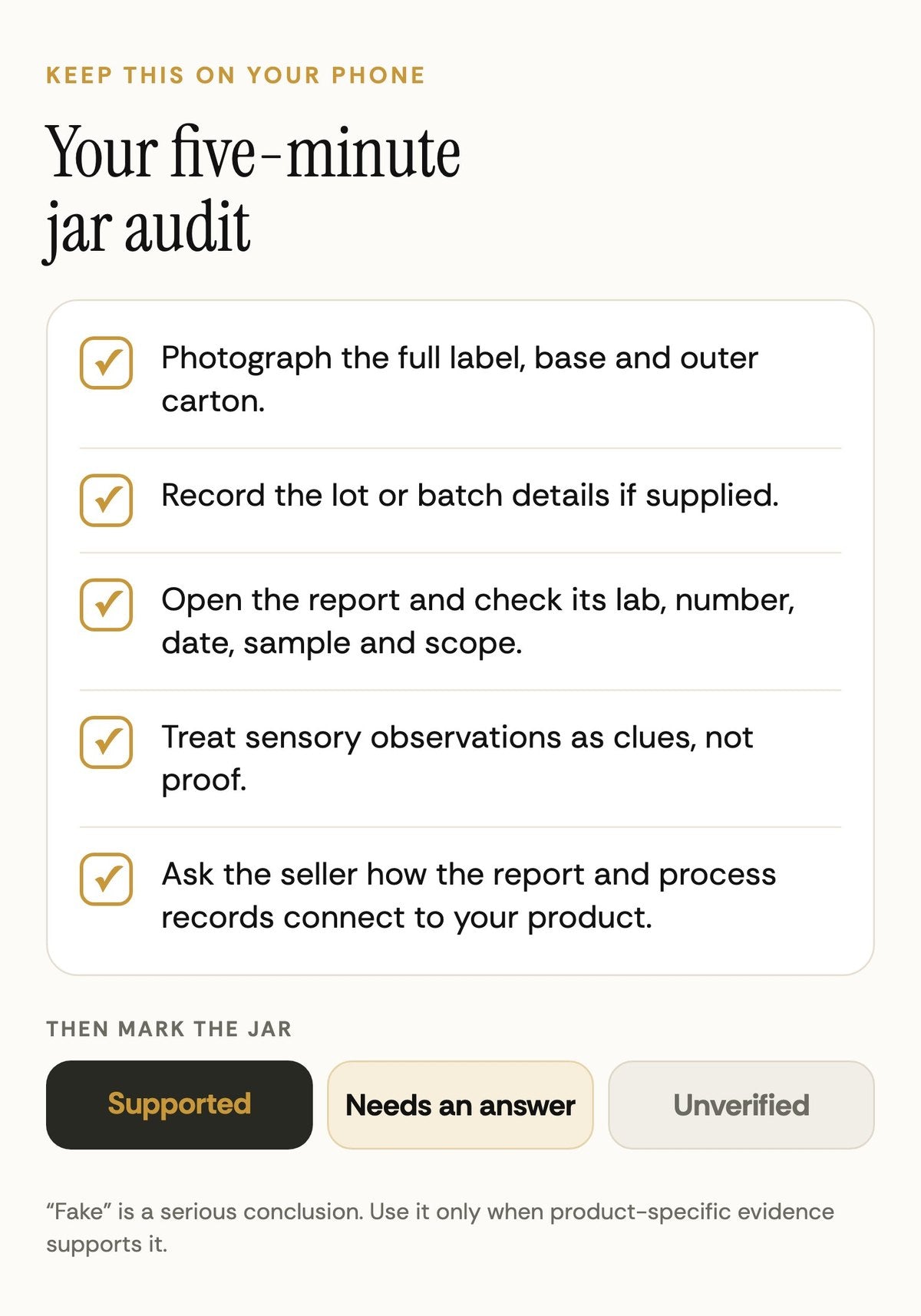
Your five-minute jar audit
- Photograph the full label, base and outer carton.
- Record the lot or batch details if supplied.
- Open the report and check its lab, number, date, sample and scope.
- Treat sensory observations as clues, not proof.
- Ask the seller how the report and process records connect to your product.
If those answers are incomplete, call the jar unverified until the seller supplies better evidence. “Fake” is a serious conclusion. Use it only when product-specific evidence supports it.
We Put the Paper Trail Beside the Jar
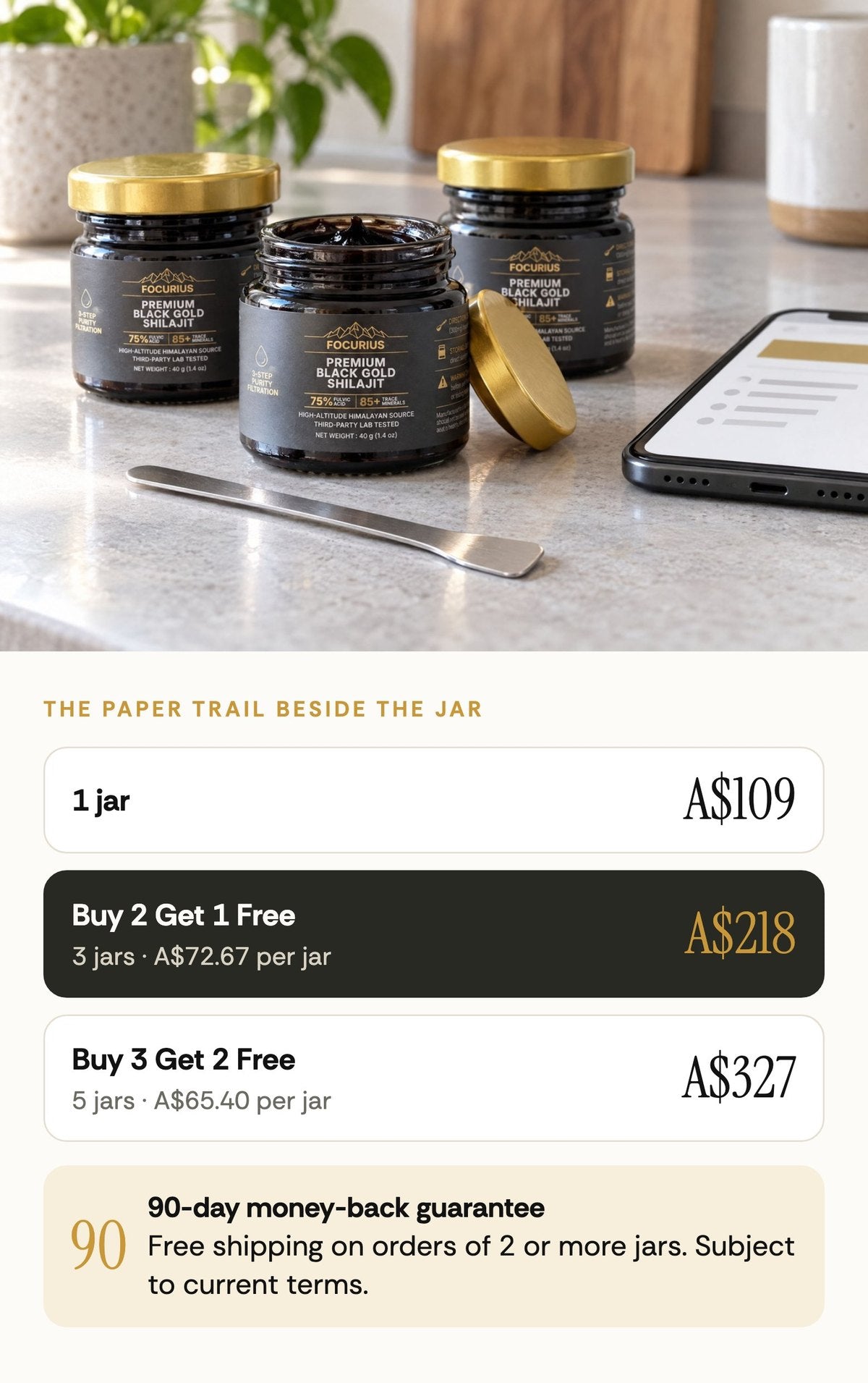
Our label, directions and public reports are available before your first serve. Every order also comes with a 90-day money-back guarantee, subject to the current terms.
- 1 jar: A$109
- Buy 2 Get 1 Free: A$218 for 3 jars, or A$72.67 per jar
- Buy 3 Get 2 Free: A$327 for 5 jars, or A$65.40 per jar
- Free shipping on orders of 2 or more jars, subject to current terms
Frequently asked questions
Does bitter taste prove shilajit is real?
No. Earthy, mineral and bitter are normal resin traits, but taste can neither measure composition nor prove origin.
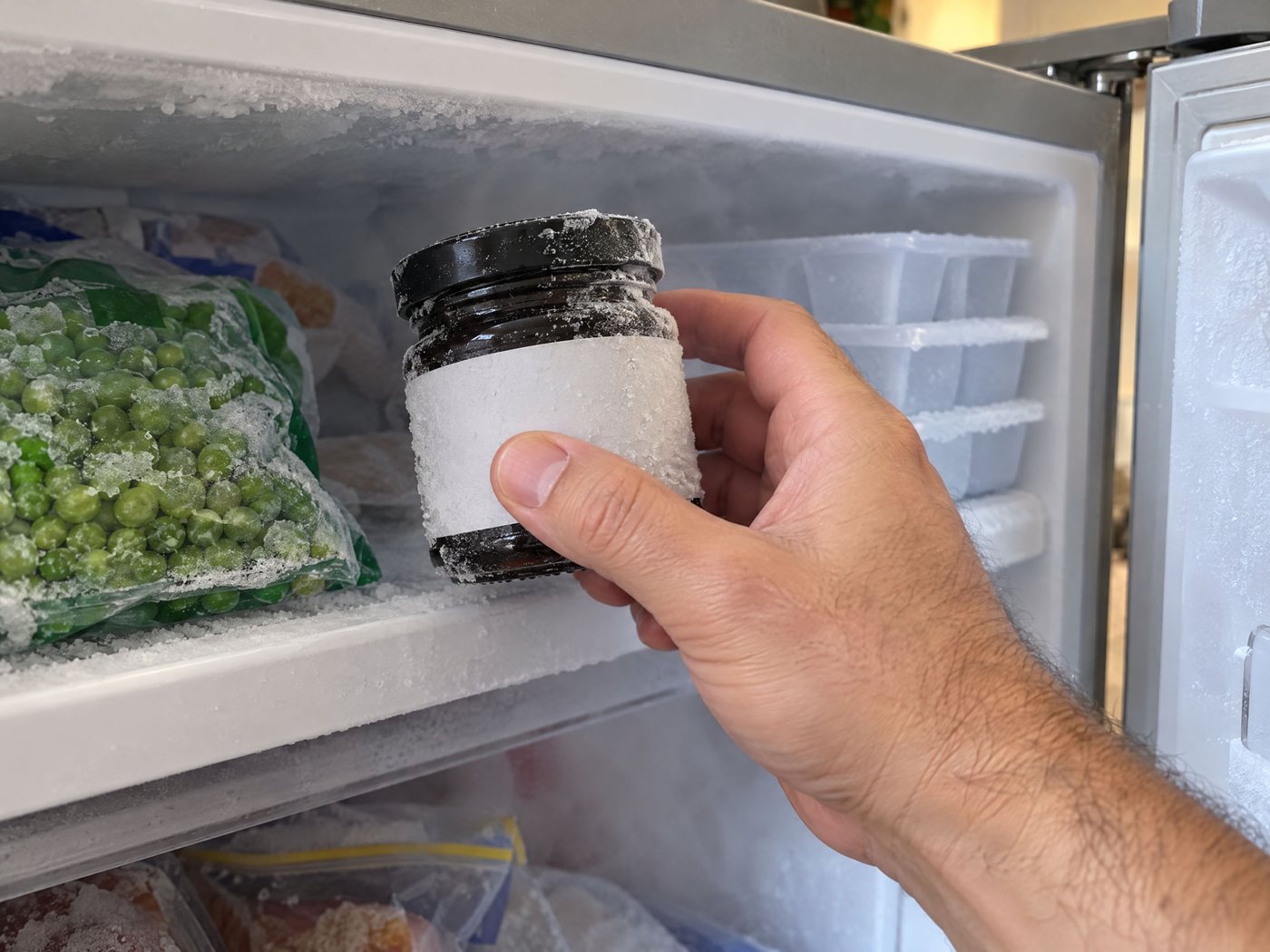
Does the freezer test work?
Temperature can change resin texture. That observation does not establish identity, potency or contaminant levels.
What if there is no lot number on my jar?
Ask the seller what identifier links the product to its quality records. Missing detail is a reason to seek clarification, not automatic proof of fraud.
Can a report prove my exact jar is safe?
A report supports the submitted sample and the tests it lists. Ask how that sample relates to your product. No document proves every possible risk or every future jar.
The strongest authenticity check is not dramatic. It is traceable.
Start with the jar. Follow its evidence. Ask the questions the label cannot answer. We show our work so you can inspect Black Gold with the same standard.
Always read the label and follow the directions for use. Consult your healthcare professional if you are pregnant, breastfeeding, taking medication or managing a health condition.