

Miracles Are Cheap. Proof Is Not.
Five shortcuts can turn a bargain jar into expensive black goo. Here is what we do instead, and the public lab result that backs it up.
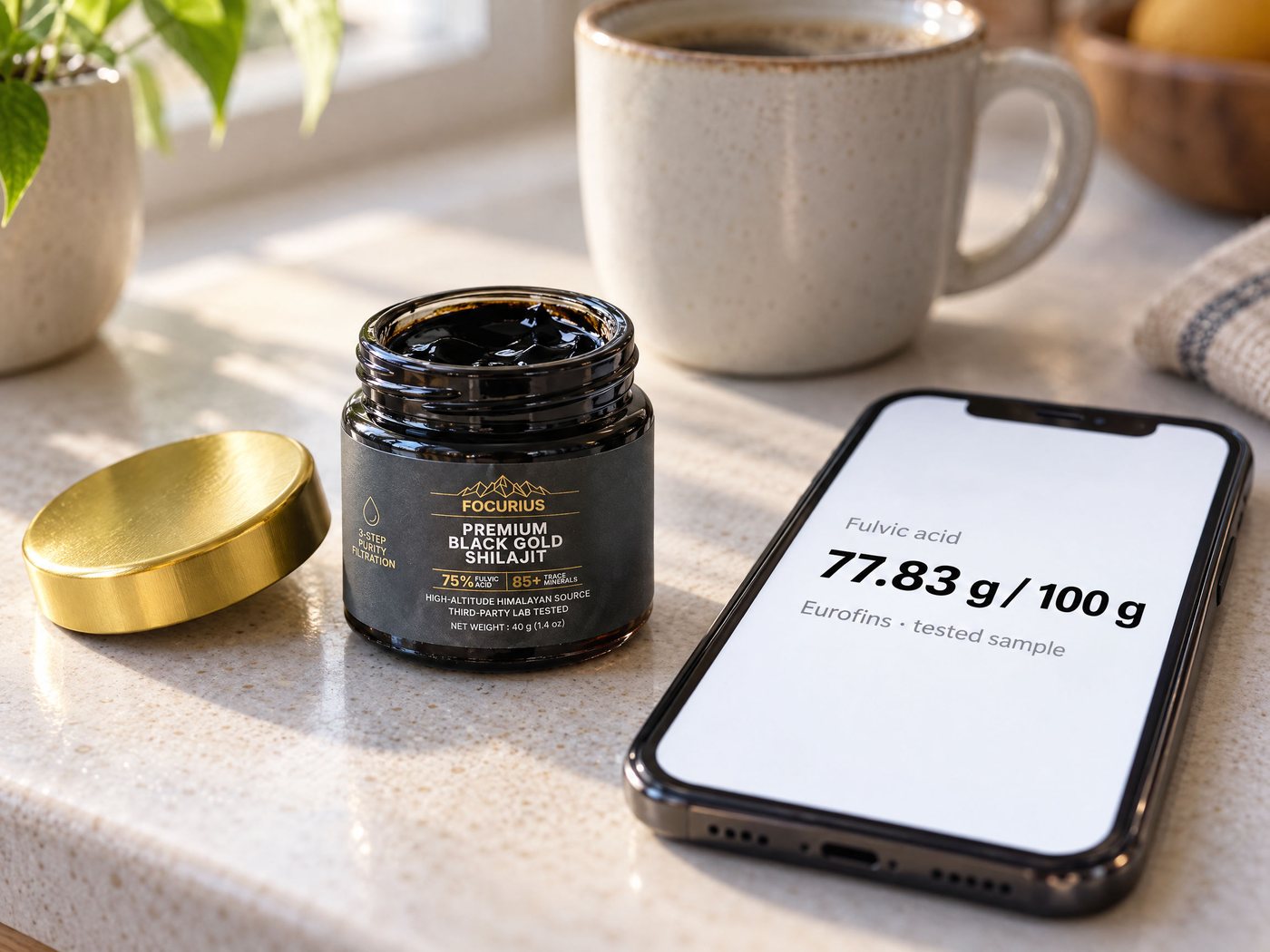
You buy the black jar. You scoop out the sticky resin. You put up with the bitter, earthy taste every morning because the ad promised you would feel like yourself again.
Then the jar gets lighter, your doubts get heavier, and you start wondering whether shilajit is all hype.
That frustration is fair. But it may not be shilajit that failed the test. It may be the jar.
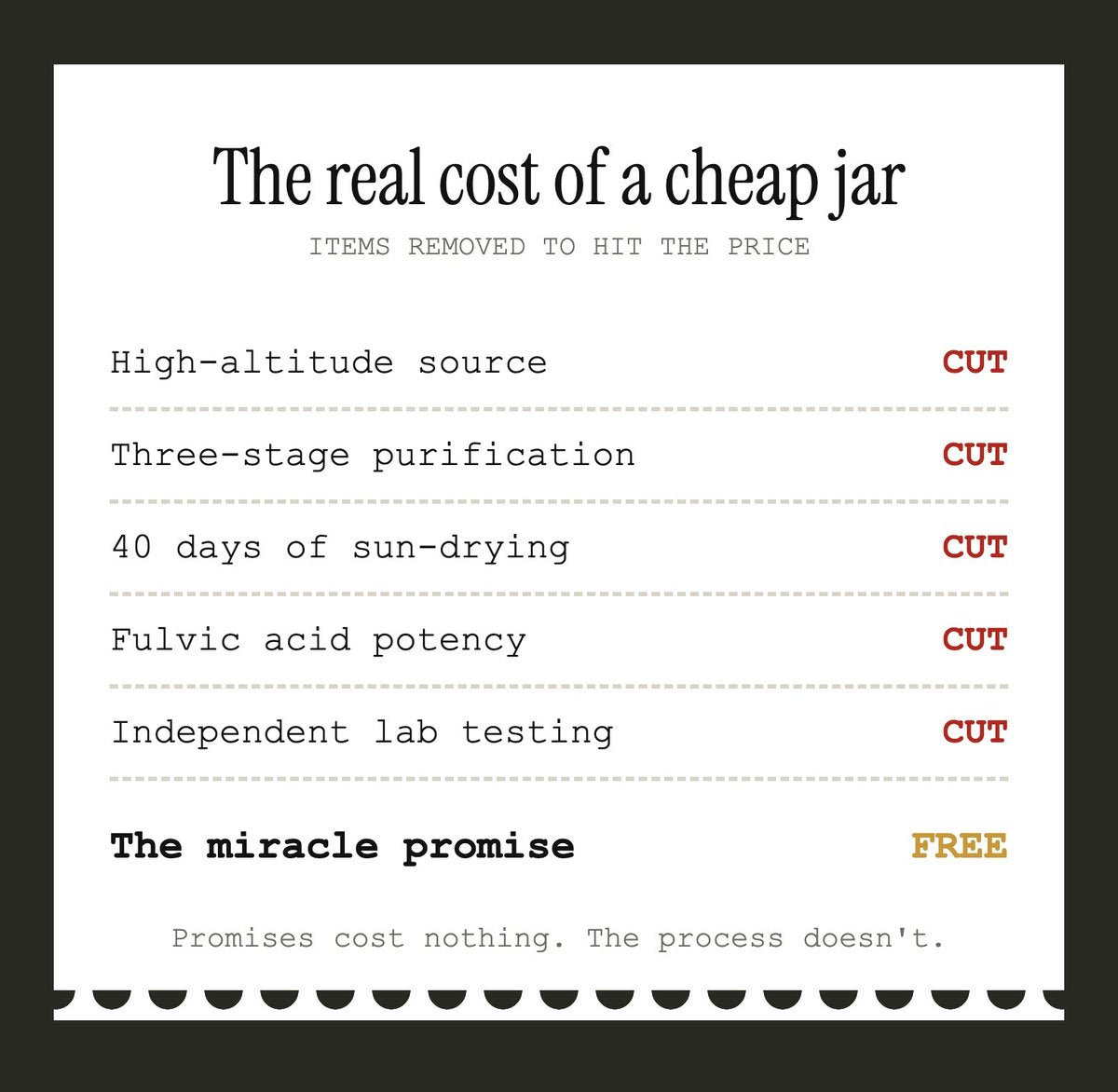
Cheap brands can make the biggest promises because promises cost nothing. High-altitude sourcing costs more. Careful purification takes time. Forty days of sun-drying can't be rushed. Independent testing is another bill, and publishing the report lets buyers inspect the result.
So the bargain only works if something disappears from the process.
We would rather show you where the money goes.
The cheap-resin playbook
The jar looks premium because dark glass is easy. The process is where the difference starts.
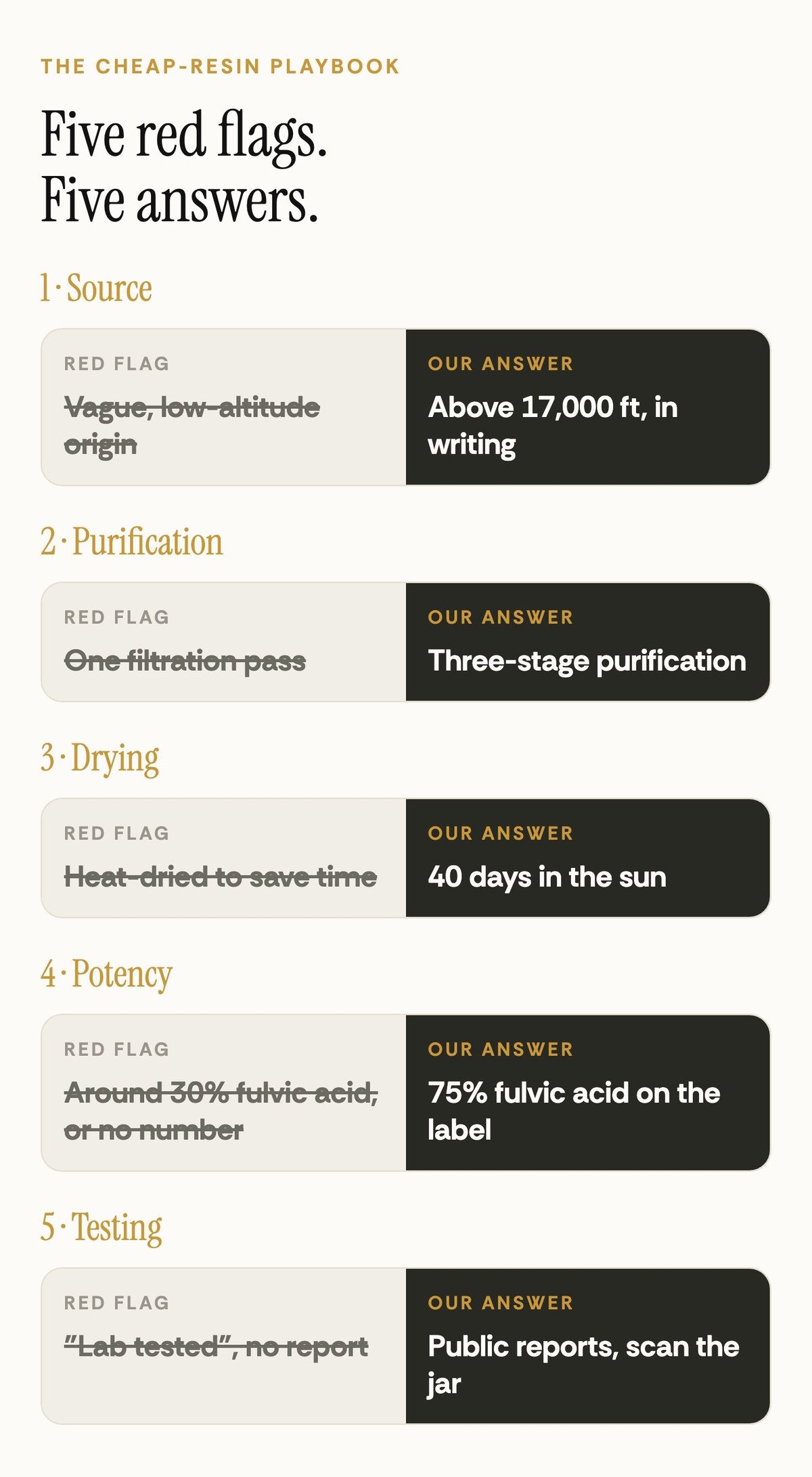
Here are five shortcuts to look for before buying any shilajit:
1. Low-altitude material with a vague origin story.
“From the Himalayas” can cover an enormous area. We source our resin from above 17,000 feet. We put the altitude in writing because origin should be specific enough to question.
2. One filtration stage dressed up as purification.
One pass is faster and cheaper than three. We use a three-stage purification process because raw mountain material should not go straight from rock to jar.
3. Heat drying instead of patience.
Heat can finish a batch quickly. We choose a 40-day sun-drying process. It's slower because we're making resin, not racing a production clock.
4. A fulvic acid number around 30%.
Thirty per cent isn't automatically fake. It is simply a very different concentration from our 75% label claim. If a brand doesn't state the number at all, there isn't even a basis for comparison.
5. “Lab tested” with no public report.
If you can't see the laboratory, report number, issue date and tested panel, you're still being asked to take the seller's word for it.
That is the cheap-resin playbook: sell the miracle, hide the making.
What real shilajit actually is
Shilajit is a naturally occurring, mineral-rich resin found in high mountain regions, including the Himalayas. It has been used for centuries in Ayurveda, where it is traditionally used to support vitality and energy.
That history is why people care about it. It isn't a licence for a modern brand to bottle anything dark and tell an ancient story.

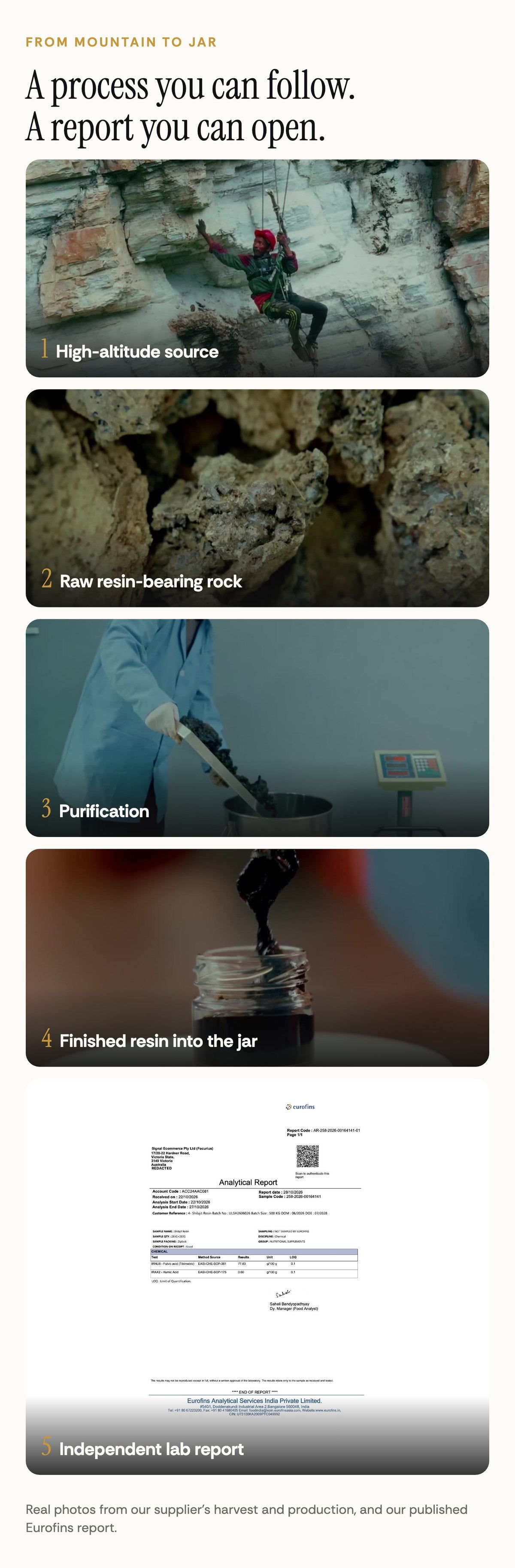
The resin still has to travel from a remote mountain source to a finished jar. Every choice along that path matters: the altitude it comes from, how the raw material is cleaned, how the moisture is removed, how much fulvic acid remains in the finished resin and whether an independent laboratory checks the batch.
The goal isn't to make shilajit taste sweet or look glossy. Real resin is earthy, mineral and bitter. The goal is to preserve what makes the material worth taking while removing the uncertainty that makes the category hard to trust.
We do that with a process you can follow, then a report you can open.
Potency should be a number
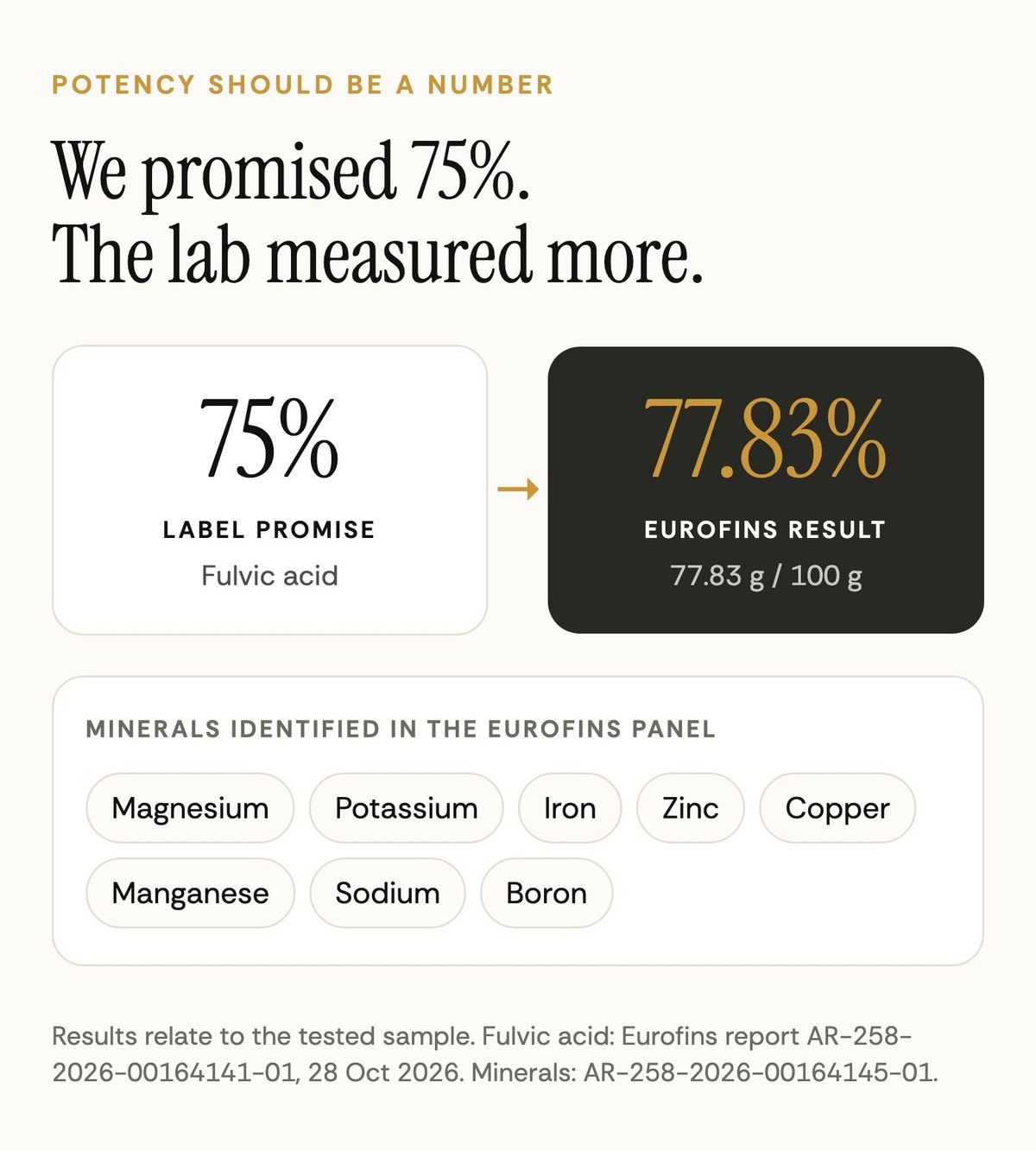
Fulvic acid is a naturally occurring component of shilajit and one of the clearest numbers available when comparing finished resin.
Our label promises 75% fulvic acid.
We could have stopped there. Most supplement marketing does.
Instead, we sent the finished sample to Eurofins. The result was 77.83 g per 100 g, or 77.83% in the tested sample. The resin did not merely match what we put on the label. It came in above it.
Our resin is also described as containing 85+ ionic minerals. A separate Eurofins panel identified minerals including magnesium, potassium, iron, zinc, copper, manganese, sodium and boron in the tested sample.
Those details matter because most people aren't buying shilajit for an exciting flavour. They are looking for a simple morning ritual that supports the energy and vitality they want to bring to work, training and life outside both.
No number can promise how one person will feel. It can tell you whether a brand is willing to measure what it sells.
We put the reports where buyers can read them
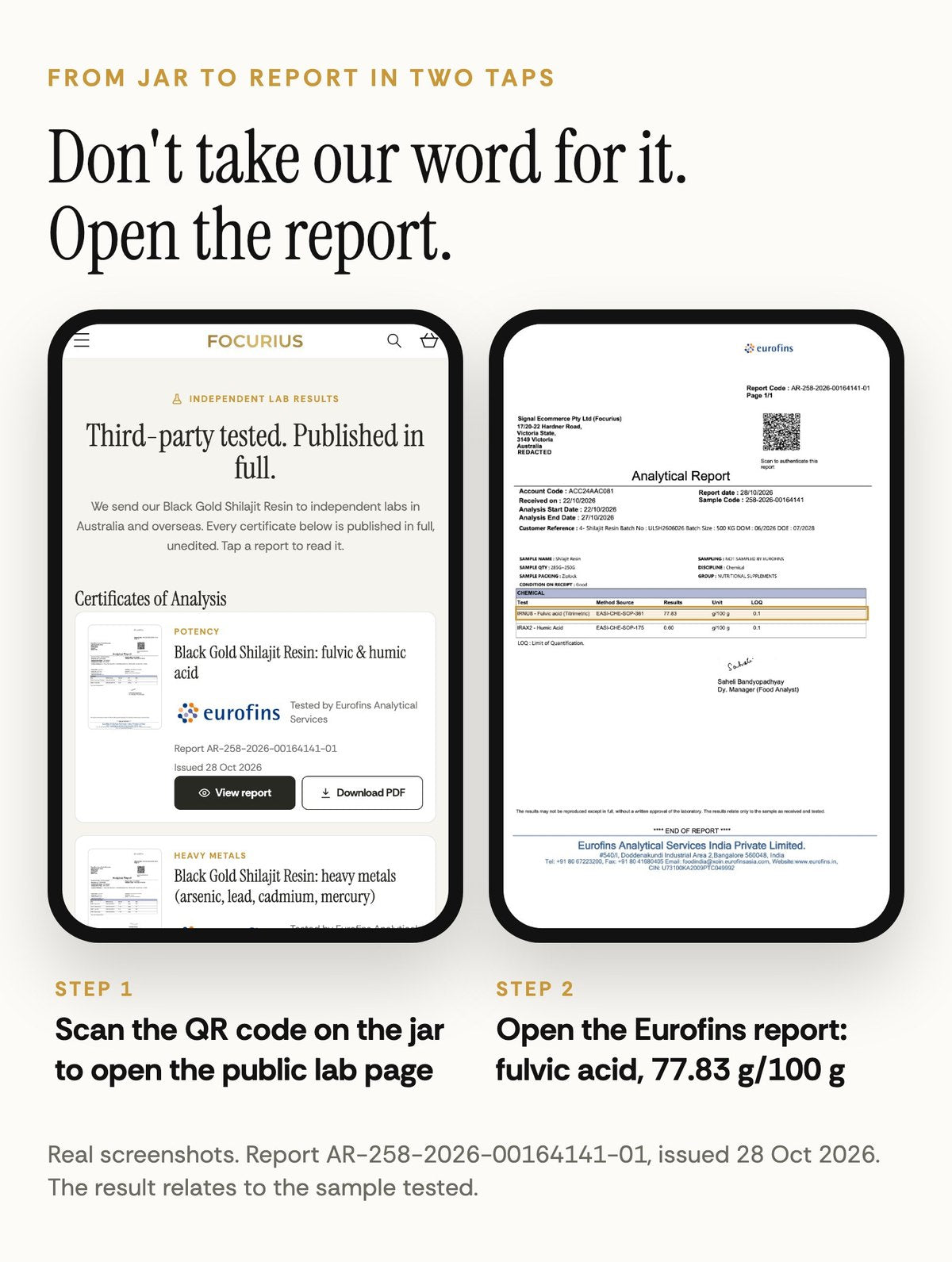
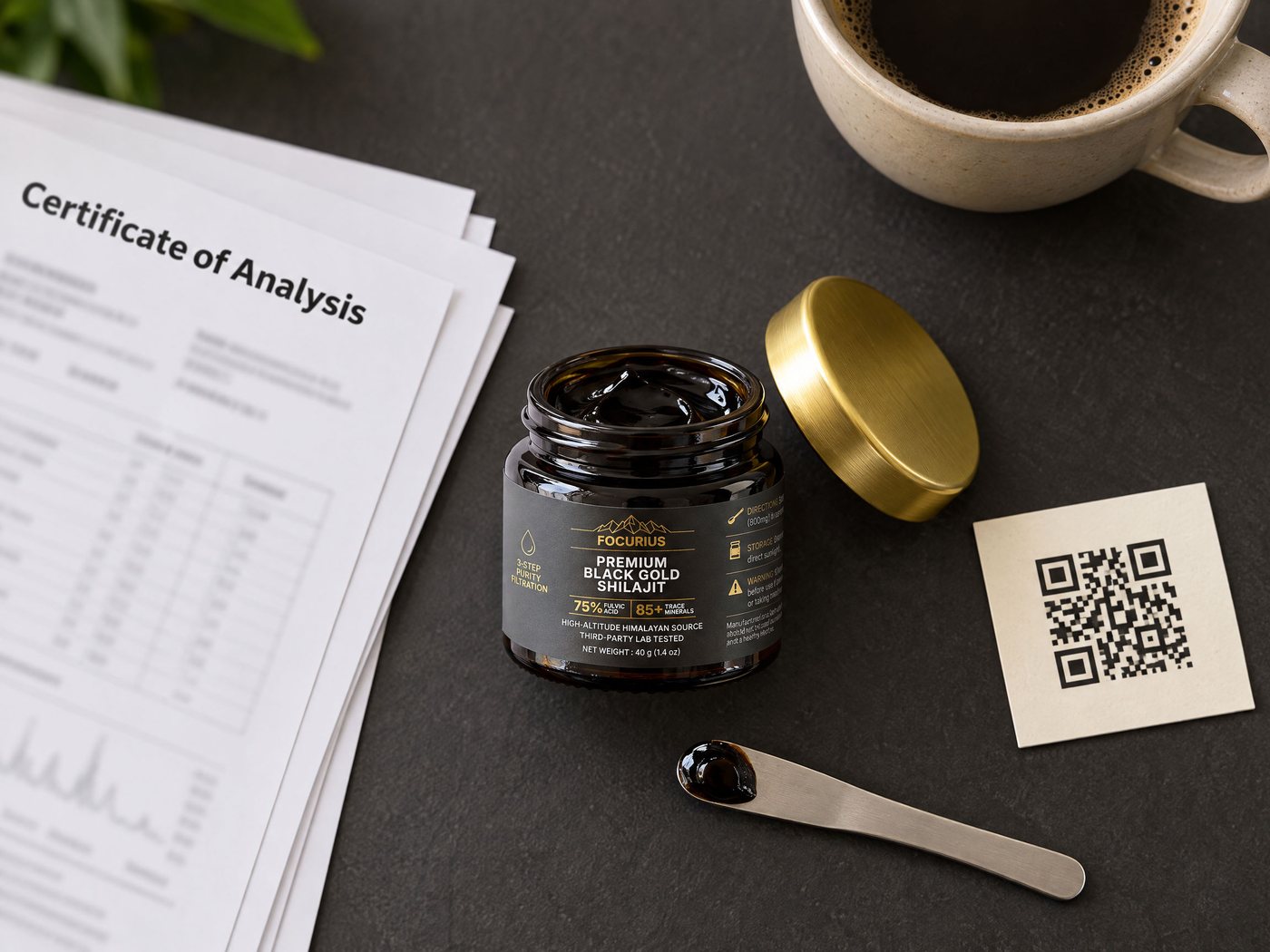
Every jar links to our public lab page by QR code. At the time of writing, that page contains eight reports from Eurofins and Envirolab.
They don't sit behind an email form. You don't need to message us and hope someone sends the right PDF. You can open the page and inspect the laboratory name, report number, date and tested panel yourself.
The published set includes testing for fulvic and humic acid, minerals, moisture, pesticides, mycotoxins, PAHs and heavy metals. The heavy-metal panel reports arsenic, cadmium, lead and mercury for the tested sample.
That is more useful than a dramatic burn test in a social video. A flame can't tell you the fulvic acid concentration. Freezing a jar can't identify lead. Dissolving resin in warm water can't name the laboratory that checked it.
Kitchen tricks make good content. A current batch report makes a better buying decision.
It is resin, not a lolly
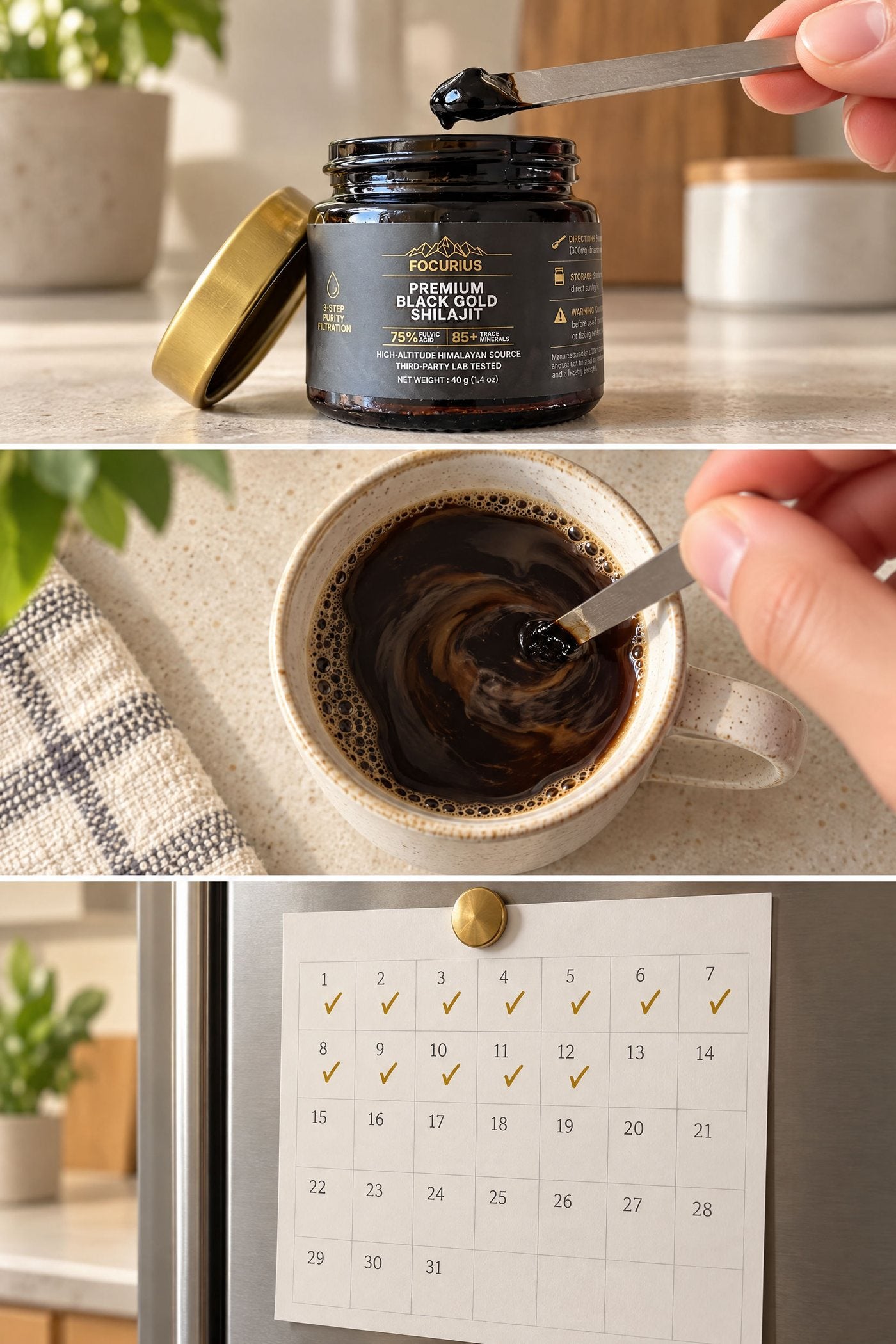
Start with a rice-grain to pea-sized amount, around 300-500 mg. Dissolve it in warm water, tea or coffee, usually in the morning, and follow the label directions.
The taste is earthy, mineral and bitter. We have not buried it in sugar, flavouring or a gummy. Coffee softens the taste. Plain warm water gives you the full experience.
Don't expect a caffeine-style jolt in ten minutes. Shilajit isn't positioned as a stimulant, and taking more doesn't make the experiment more honest.
Keep the serving and the rest of your routine steady. Give yourself time to notice what matters in real life: whether the morning ritual is easy to keep, whether your days feel steadier and whether you reach for fewer emergency coffees in the afternoon.
Individual experiences vary. The fair test is consistency, not chasing a miracle on day one.
Compare the work, not the glass
We aren't trying to win the cheapest-jar contest. We are trying to make the choice easier to defend after the parcel arrives.
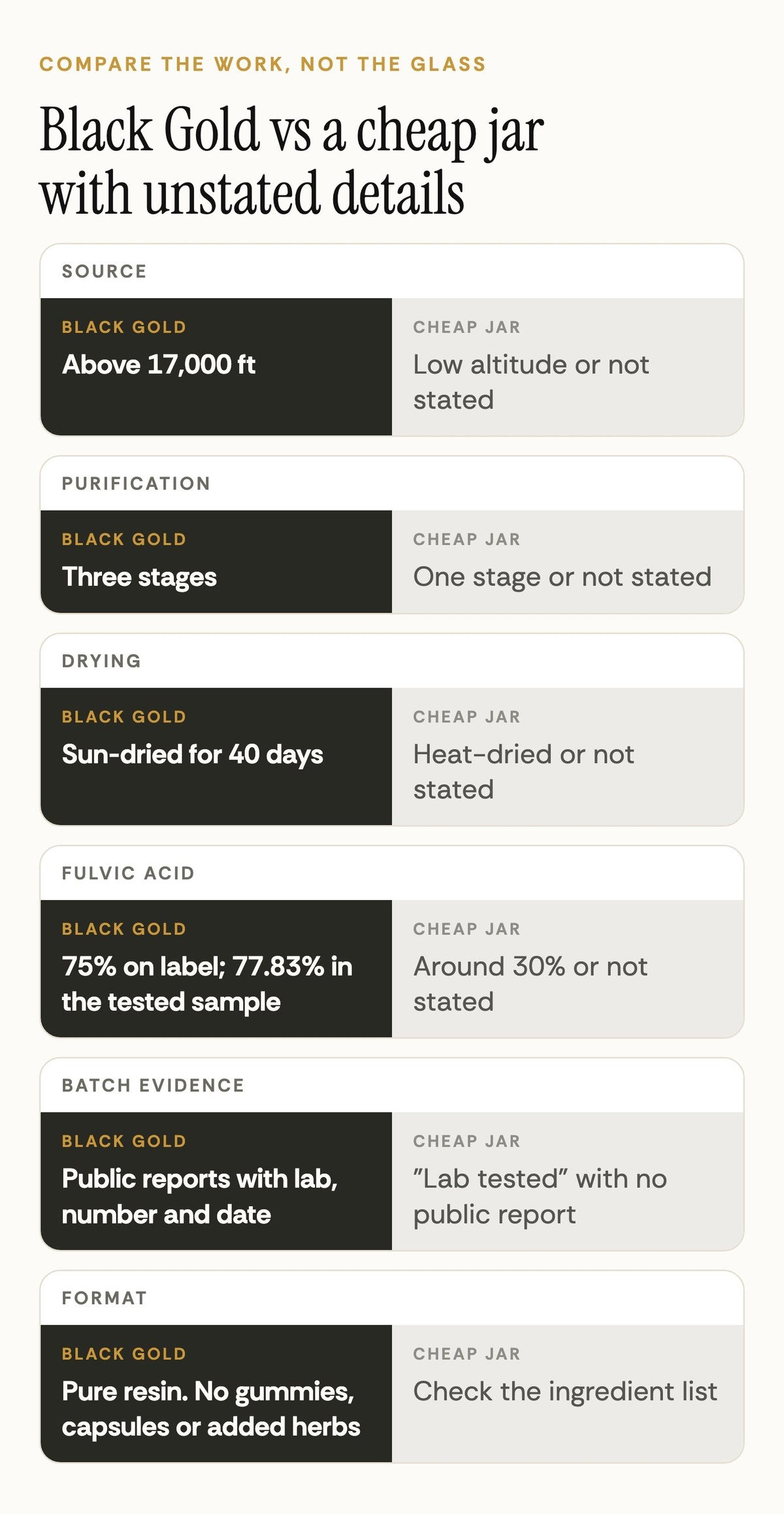
An unstated detail doesn't prove a jar is fake. It means the brand has left you to fill in the blank.
We would rather give you fewer blanks: a specific source, a defined process, a label number and a public laboratory result.
That is what premium should mean.
Buy the process once. Test it properly.
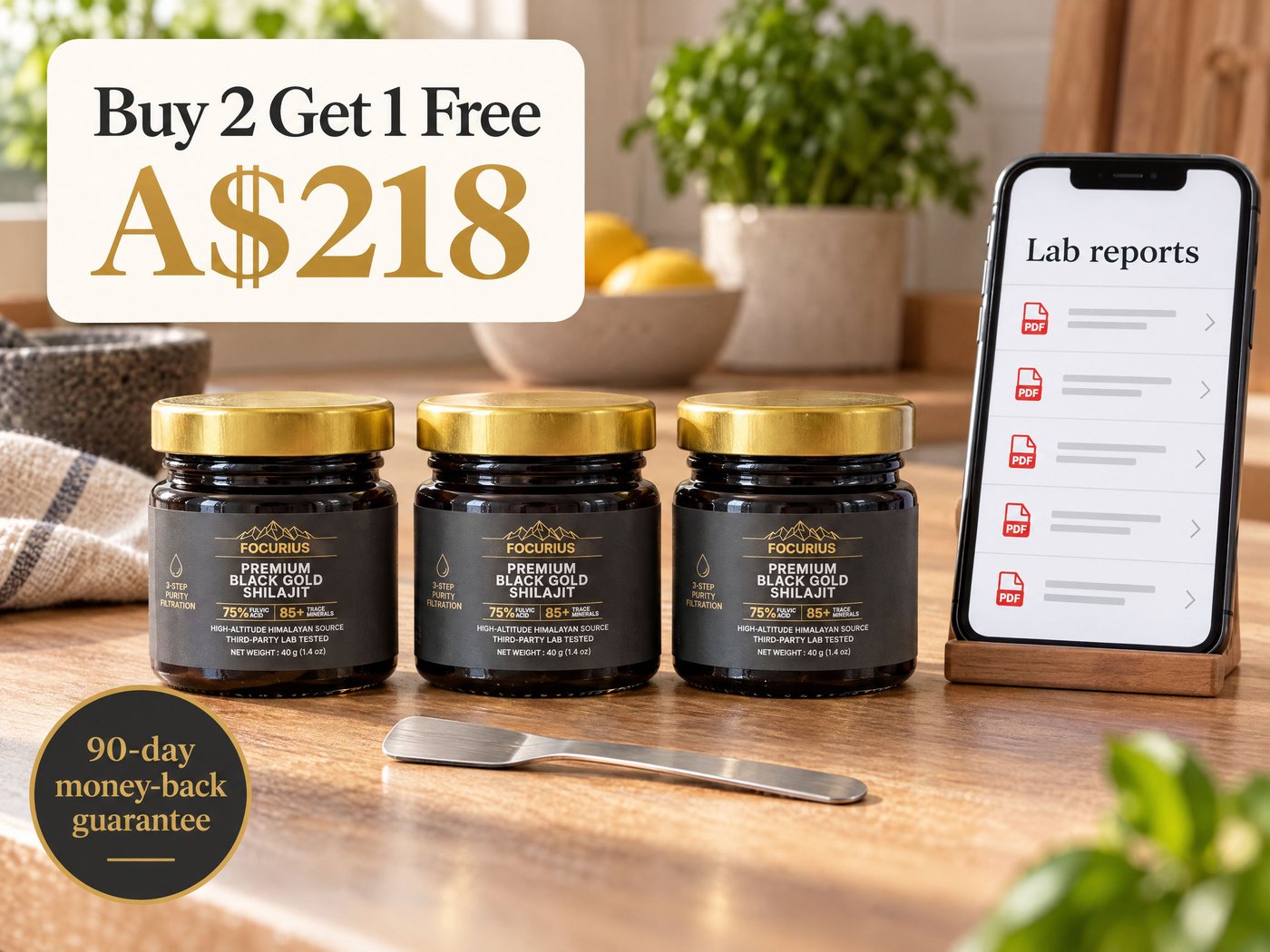
Our lead bundle is Buy 2 Get 1 Free for A$218. That gives you three jars at A$72.67 each, with free shipping on orders of two or more jars under the current offer.
One jar is currently A$109. Our larger Buy 3 Get 2 Free bundle is A$327 for five jars, or A$65.40 each.
Every purchase is backed by our 90-day money-back guarantee. If Black Gold isn't right for you, use the guarantee terms on our site.
No countdown. No miracle deadline. Just enough time to use the resin consistently and decide from experience.
Frequently asked questions
Does a burn, cold or water test prove shilajit is real?
No. Home tests can show how a resin behaves, but they can't measure fulvic acid or identify contaminants. We use the public laboratory reports as the proof point.
Why is the taste so earthy?
Because this is pure resin, not a flavoured gummy. Expect a mineral, earthy and bitter taste. Warm coffee or tea makes it easier for many people.
How much should I take?
Use the included spatula for a rice-grain to pea-sized amount, around 300-500 mg, once daily. Dissolve it in a warm drink and follow the label.
Can I take it with medication?
Speak with your healthcare professional before adding any supplement if you take medication or manage a health condition. Do the same if you're pregnant or breastfeeding.
How long does one jar last?
At the stated daily serving, one jar is designed to last roughly three months. The exact duration depends on the amount you use.
Do you ship from Australia?
Yes. We ship from Melbourne. Current delivery options, costs and timing appear at checkout.
Cheap promises disappear quickly. A public result stays there for you to inspect.
Always read the label and follow the directions for use. Consult your healthcare professional if you are pregnant, breastfeeding or taking medication.